
The Quiet Machine: Why the Best Technology Is the Kind You Stop Noticing

From the disappearing smartphone to the rise of ambient AI, a generation of engineers is building tools that vanish into the background — and rewriting what it means to be present in a wired world.
The first time I noticed it, I was making coffee. The kitchen lights had dimmed themselves to a warm 2700K. A playlist I hadn’t chosen was playing softly through speakers I didn’t remember installing. My calendar had quietly rescheduled a morning call because the system somehow knew — from my sleep score, from the rain outside, from the half-finished message I had typed and abandoned at 2 a.m. — that I needed an extra hour.
I never touched a screen.
For most of the last two decades, technology has demanded our attention. Notifications, dashboards, dark patterns, infinite feeds — the dominant interface paradigm has been one of pull and friction. But quietly, in the background of every major tech keynote of the last few years, a different idea has been taking shape. It goes by many names: ambient computing, calm technology, spatial intelligence, post-screen design. Stripped of its branding, it amounts to the same wager: that the best technology is the kind you stop noticing.
We measured the last generation of progress in screens per household. We will measure the next one in the absence of them.
The phrase ambient computing was coined in the late 1980s by Mark Weiser at Xerox PARC, the same lab that gave us the graphical user interface, the mouse, and the laser printer. Weiser called his idea “the third wave of computing.” The first wave was the mainframe — one computer, many people. The second wave, which we are still living through, is the personal computer — one person, one device.
The third wave, he predicted, would invert the math again: many devices, woven so deeply into the fabric of daily life that they would become, in his now-famous phrase, “indistinguishable from it.”
For most of the intervening forty years, that vision sat on a shelf. The smartphone, paradoxically, both delayed and enabled it — delayed it by training a generation to stare at glowing rectangles, and enabled it by quietly building the sensor networks, the AI infrastructure, and the user expectations that ambient computing requires.
What changed
Three things converged. First, sensors got cheap. A modern flagship phone contains over a dozen of them — accelerometers, gyroscopes, magnetometers, barometers, lidar, microphones, ambient light sensors — and that is before you count the wearables and home hubs that have multiplied around it.
Second, machine learning moved from cloud to edge. Models that once required a data center now run on a watch. Third, and most importantly, the assumption shifted: instead of asking users to issue commands, designers began asking what the system already knew.
— share of consumer AI inference expected to run on-device by 2027
— connected ambient devices projected globally by 2030
— average attention span the typical smartphone notification interrupts
The implications cut in two directions. On one hand, ambient computing promises a more humane relationship with our tools — a world where you do not unlock, scroll, or swipe; a world where your calendar, your home, your car, and your work simply know enough to act on your behalf, quietly, in your interest. On the other hand, that same world demands a level of trust and surveillance that should give any thoughtful person pause. A machine that knows enough to disappear is also a machine that knows enough to manipulate.

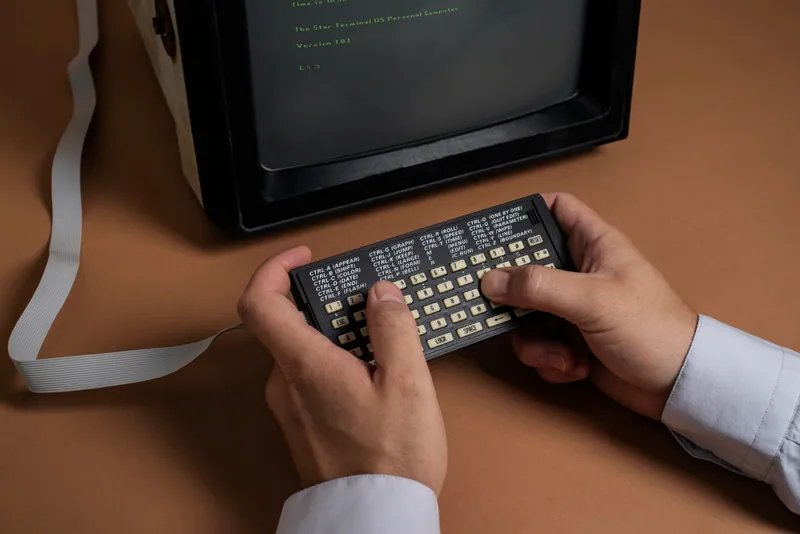

Designing for absence
Designing technology that disappears is, paradoxically, much harder than designing technology that shouts. A screen will tolerate a clumsy decision; an ambient system will not. Get the timing of a notification wrong on a phone and users tap it away. Get the timing wrong on a system that controls their lights, their thermostat, or their commute, and you lose their trust permanently.
The new craft, then, is one of restraint. The best ambient interfaces are governed by a small set of principles — many of them adapted from older disciplines like industrial design, architecture, and the slow-food movement.
Five principles of calm technology
- Default to silence. Notify only when action is required, not when activity is available.
- Respect the periphery. The best information sits at the edge of awareness, not the center.
- Reward attention, never demand it. Every interruption is a debt the system must repay in value.
- Make the right thing the easy thing. The path of least resistance should be the path of greatest benefit.
- Degrade gracefully. When the system fails, it should fall back to a state the user can still understand.

None of this is inevitable. The same technological substrate that enables ambient computing also enables its worst inversions — the always-on listening device, the predictive policing model, the workplace that tracks every keystroke. Calm technology and surveillance technology are, at the level of hardware, indistinguishable. What separates them is intent, business model, and regulatory environment. Anyone who watched the smartphone era unfold has reason to be skeptical that the industry will choose well on its own.
And yet there is something genuinely new in the air. A growing cohort of founders, researchers, and designers are betting their careers on the idea that the next great consumer category will not be a thinner phone or a brighter screen, but the quiet erasure of both. Whether they succeed will depend less on what they build than on what they have the discipline not to.
The question is no longer "how do we capture the user's attention?" The question is "what does the user not need to do?" The companies that figure out the second question will own the next decade.
The first computers were built to be admired. The next ones, if we are lucky, will be built to be forgotten. Somewhere between those two ambitions lies a question we have not yet learned to ask well: what do we want our tools to take from us, and what do we want them to give back?
The answer will not come from any single product launch. It will come, quietly, from a million small design decisions made over the next decade — most of which we will never see, and none of which we should have to.
That, after all, is the point.










0 comments
Be the first to start the discussion.